

User Instructions and FAQs
THE HONE GUIDE
A sharper routine. Made simple.
Learn the essentials, explore your accessories, and find answers to everyday questions.
START HERE
Your first sharpen.
A step-by-step introduction to your HONE Knife Sharpener.
Watch the guideVIDEO GUIDES
Make the most of your HONE.
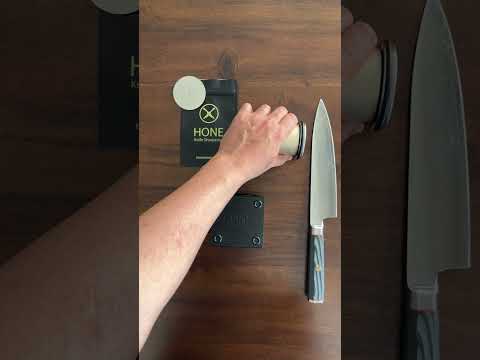
Detach. Flip. Refresh.
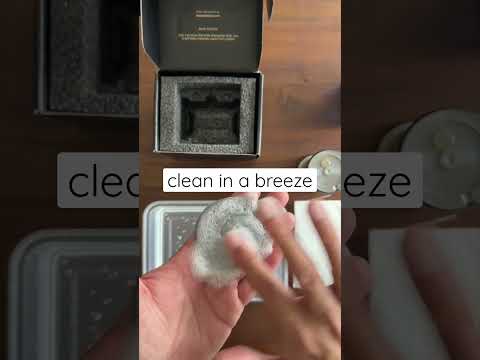
Cleaning your discs
Sharpening taller knives

Support for smaller blades
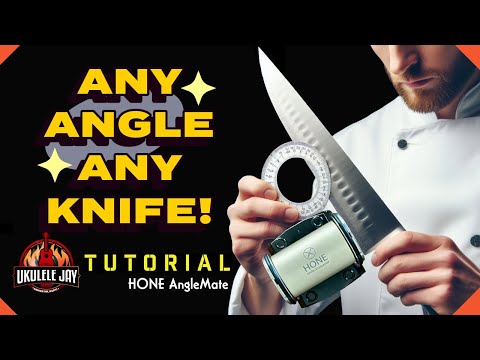
Using HONE AngleMate

Using the Leather Strop

Using the Vertical Strop

Using HONE Extension

Using the Fillet Knife Holder

Sharper over time

The 3-2-1 method
Videos open on YouTube. For disc care, detach the disc, wash with dish soap and water, and dry completely before reinstalling.
SHOP HONE
Ready to sharpen smarter?
The HONE Knife Sharpener. Engineered in Canada. Built to last a lifetime.
FAQs
Good questions. Clear answers.
Getting Started
What is included with the HONE Knife Sharpener?
The complete HONE Knife Sharpener kit includes one magnetic Knife Holder, one Rolling Sharpener, one double-sided #400 Diamond Disc, and one double-sided #1000 Diamond Disc.
HONE Knife Sharpeners purchased from our website currently also include a free #3000 Ceramic Honing Disc, a CAD $45 value.
How do I sharpen a knife with the HONE Knife Sharpener?
Place a compatible magnetic, smooth-edged knife securely against the appropriate 15° or 20° side of the Knife Holder.
Begin with the #400 Diamond Disc and roll the sharpener evenly along the entire cutting edge. Turn the knife over and repeat the process on the other side. Continue with the #1000 Diamond Disc, then finish with the #3000 Ceramic Honing Disc when available.
Use light, even pressure and keep the Rolling Sharpener flat on a clean, stable surface.
For step-by-step demonstrations, see the User Instructions and videos above.
How long does it take to sharpen a knife?
The first sharpening normally takes longer because the knife’s existing edge may not match the selected 15° or 20° angle. Most knives can be sharpened in approximately 2–6 minutes.
Harder steels, badly damaged edges, and knives being reprofiled to a different angle may take longer. Once the new angle has been established, regular maintenance normally requires only a few passes.
What is the difference between the 15° and 20° sharpening angles?
The 20° angle is commonly used for Western and general-purpose kitchen knives. It creates a strong, durable edge that is suitable for everyday use.
The 15° angle creates a finer edge and is commonly used for many Japanese and Damascus knives made from harder steel. However, sharpening-angle recommendations vary, so check the knife manufacturer’s guidance whenever possible.
For the best results, continue using the knife’s existing angle unless you intentionally want to reprofile the edge. Changing the angle may require additional sharpening and will remove more metal during the initial reprofiling.
Why does my knife become sharper with repeated use of HONE?
HONE maintains the same sharpening angle during every use. As the bevel becomes increasingly consistent, the cutting edge becomes more uniform and precise.
After the initial sharpening, regular maintenance at the same angle normally requires less time and fewer passes.
What is the 3-2-1 method?
The 3-2-1 method uses gradually fewer alternating passes on each side of the knife to help align the apex in the centre.
A knife may have a sharp bevel but still feel dull if the apex is leaning to one side. Gradually reducing and alternating the finishing passes helps centre the edge for improved cutting performance.
See the 3-2-1 Method video in the User Instructions section above.
Knife Compatibility
Which knives can I sharpen with HONE?
HONE is designed for magnetic, smooth-edged metal knives that can be held securely by the Knife Holder. This includes most kitchen knives, cleavers, and many smooth-edged hunting and folding knives.
HONE is not suitable for serrated or scalloped blades, ceramic or other non-magnetic knives, scissors, or any blade that cannot be safely secured.
Can I sharpen ceramic knives?
No. Ceramic blades are not magnetic and therefore cannot be secured to the magnetic Knife Holder. HONE is designed for compatible metal knives.
Can I sharpen Damascus knives?
Yes. HONE’s Diamond Discs are suitable for sharpening Damascus steel.
Many Damascus knives use a relatively fine angle, but the correct angle depends on the knife. Check the manufacturer’s recommendation before sharpening and use light, even pressure.
Can I sharpen a single-bevel Japanese knife?
Yes. A single-bevel Japanese knife may be sharpened on its bevelled side only when appropriate for the knife’s design.
Secure the knife carefully, follow the manufacturer’s recommended angle, and avoid sharpening the flat side in the same manner as a standard double-bevel knife.
Can I sharpen serrated knives or bread knives?
No. HONE’s flat sharpening discs are designed for smooth cutting edges and should not be used on serrated or scalloped blades.
Sharpening a serrated bread knife with a flat Diamond Disc may damage both the serrations and the sharpening disc.
Can I sharpen scissors with HONE?
No. Scissors have a different edge geometry and cannot be safely positioned on the HONE Knife Holder. Use a sharpening system specifically designed for scissors.
How do I sharpen a knife that is taller than the Rolling Sharpener?
For a tall knife such as a large cleaver, place the Rolling Sharpener on a clean, stable cutting board to raise it to the height of the cutting edge.
Ensure that both the knife and the elevated surface remain stable throughout the sharpening process.
How do I sharpen a small or narrow knife?
Position the knife securely so that its cutting edge remains accessible to the sharpening disc.
If the blade is too narrow or low to be properly supported by the standard Knife Holder, the HONE Fillet Knife Holder provides additional support for small, narrow, and low-profile blades.
Will the magnets scratch my knife?
No. The HONE Knife Holder uses recessed magnets that do not directly touch the blade. Its non-slip rubber surface securely supports the knife while protecting it from scratches.
Keep the rubber and magnetic surfaces clean and remove any loose metal particles before attaching a knife.
Sharpening Discs and Maintenance
What Diamond Discs are included?
The HONE Knife Sharpener includes two separate, removable, double-sided Diamond Discs.
Disc 1 is #400 grit and is used for initial sharpening.
Disc 2 is #1000 grit and is used to refine and hone the cutting edge.
Both faces of each disc have the same grit coating. When one face eventually becomes worn, detach and flip the disc to use the second coated face.
Which sharpening discs should I use and in what order?
For a normal initial sharpening, use the discs in the following order:
#400 Diamond Disc → #1000 Diamond Disc → #3000 Ceramic Honing Disc
If the knife is badly damaged or requires edge reprofiling, use the optional #200 Diamond Disc before moving to the finer grits.
For routine maintenance, use the #3000 Ceramic Honing Disc and occasionally reuse the #1000 Diamond Disc when needed. A Leather Strop may be used after honing for additional sharpness.
How should I maintain my knife after the initial sharpening?
Use the #3000 Ceramic Honing Disc for regular maintenance, with occasional use of the #1000 Diamond Disc when the edge needs more refinement.
When using the #3000 Ceramic Disc, finish with approximately five light passes on each side to help centre and polish the cutting edge. If you do not have the #3000 Ceramic Disc, finish with the #1000 Diamond Disc instead.
How long do the Diamond Discs last?
Diamond Discs may feel smoother after their first few uses. This is a normal break-in period during which excess diamond particles are removed and the disc stabilizes at its working grit.
Disc life depends on the number of knives sharpened, the condition and hardness of the knives, and the pressure used. Under normal household use, the discs can last for years. Because both faces are coated, each disc can also be detached and flipped.
Replacement discs are available separately if eventually required.
How do I detach and clean the sharpening discs?
Detach the disc as demonstrated in the User Instructions section above. Wash it with dish soap and water, then dry it completely before reinstalling it.
Do not leave a wet disc attached to the Rolling Sharpener.
Why has my #3000 Ceramic Disc changed colour?
Light metal residue and colour changes on the #3000 Ceramic Honing Disc are normal and do not mean that the disc is damaged.
Detach the disc and wash it with dish soap and water. Dry it completely before reinstalling it.
Do I need to add the free #3000 Ceramic Disc to my cart?
No. The free #3000 Ceramic Honing Disc is automatically included with qualifying HONE Knife Sharpener purchases made through our website.
Do not add the disc separately to your cart. It may arrive in a separate package from the main sharpener.
The free-disc promotion applies to qualifying website purchases. Promotions offered through Amazon or other retailers may be different.
How does the Free Disc Replacement Program work?
Customers who purchased a HONE Knife Sharpener from our website, Amazon, or another authorized retailer and have written a review on our website are eligible for one free Diamond Disc of their choice every two years for six years.
No separate enrolment is required. Your first replacement becomes available two years after the original purchase date.
Email contact@honesharp.com when you become eligible to receive your discount code. A CAD $9 shipping fee applies.
More information is available at:
https://honesharp.com/pages/hone-free-lifetime-disc-replacement-program
Accessories
Do I need accessories to use the HONE Knife Sharpener?
No. The standard HONE Knife Sharpener includes everything required for normal sharpening at 15° or 20°.
Accessories are optional and provide additional angles, support for special blade shapes, finer grit progression, stropping, or advanced polishing.
What does HONE AngleMate do?
HONE AngleMate works with the standard HONE Knife Holder to provide eight additional sharpening-angle options.
The non-slip silicone strips are placed underneath the Knife Holder. Each strip changes the angle by approximately 2°, allowing you to more closely match the original angle of different knives.
The Knife Holder shown with AngleMate is for demonstration and is not included with AngleMate.
What is the difference between the HONE Extension and the HONE Fillet Knife Holder?
The HONE Extension provides additional support for long, smooth-edged knives with sufficient blade height. It may be attached to the standard Knife Holder or positioned separately as a second support.
The HONE Fillet Knife Holder is a pair of specially designed holders for flexible, narrow, or low-profile knives that cannot be securely supported by the standard Knife Holder or Extension. The two holders can be repositioned to support different blade lengths and shapes.
Neither accessory makes HONE suitable for serrated blades.
What is the difference between the Leather Strop, Vertical Strop, and Mirror Finish?
The HONE Leather Strop is used after sharpening and honing to refine the cutting edge and achieve additional sharpness.
The HONE Vertical Strop helps maintain a consistent stropping angle through its vertical design.
HONE Mirror Finish is an advanced polishing system that uses reusable lapping films in 5-micron, 3-micron, and 1-micron grades. It is intended for customers who want an ultra-fine, highly polished edge.
What is included in the Pro Accessories package?
The Pro Accessories package currently includes five Diamond Discs in #200, #400, #700, #1000, and #2000 grits, one #3000 Ceramic Honing Disc, one HONE Leather Strop, and HONE AngleMate.
The HONE Knife Sharpener and Knife Holder are not included in the Pro Accessories package.
Ordering, Promotions, and Shipping
Where can I purchase HONE products?
HONE products are available directly from our website and through Amazon in the United States, Canada, the United Kingdom, Australia, and the United Arab Emirates.
Promotions and included accessories may differ between our website and Amazon.
Do you offer free worldwide shipping?
Free shipping applies where a free option is available for the items and destination selected. Shipping options and charges vary by product, destination and fulfillment location. Check the available options at checkout.
Orders delivered to Canada, the United States, the United Kingdom, and Australia will not incur additional import duties, tariffs, or customs fees. Orders to other countries may be subject to local import charges. Applicable sales taxes may still be collected where required.
When will my order ship, and how can I track it?
We strive to ship all orders within 48 hours, excluding weekends and holidays. Transit time is separate from order processing and varies by product, destination and selected shipping service. Check the available transit estimate at checkout; if no estimate is shown, contact us for guidance. Delivery estimates are not guaranteed and may be affected by carrier or customs delays.
Tracking information will be provided after shipment whenever tracking is available. Some smaller items may be sent by regular mail without tracking.
If you need assistance, email contact@honesharp.com with your order number.
Why do you need my telephone number?
Some couriers require a telephone number so they can contact you to schedule delivery or resolve a delivery issue.
Providing a valid telephone number helps prevent avoidable delays or an undeliverable package.
Will every item in my order arrive in the same package?
Not always. The free #3000 Ceramic Disc and certain accessories may be shipped separately from the main HONE Knife Sharpener. An item may also be sent later if it is temporarily on back order.
Please review all tracking information provided for your order before reporting an item as missing.
What should I do if tracking says delivered but I cannot find my package?
Check your mailbox, building reception, other likely delivery locations, and with anyone else at the delivery address. Smaller accessories may arrive in a small packet.
If you still cannot locate the package, email contact@honesharp.com with your order number and tracking information so we can assist you.
How does the 20% upgrade offer work?
Customers upgrading from another brand of knife sharpener may qualify for 20% off a HONE Knife Sharpener.
Email contact@honesharp.com with a copy of the purchase receipt for your existing sharpener. We will send you a discount code that can be applied at checkout.
More information is available at:
Why is my discount code not working?
Discount offers cannot normally be combined.
If you are using an upgrade discount, do not add the promotional #3000 Ceramic Disc separately to your cart. The disc is automatically included with qualifying website purchases. Remove it from your cart and apply the discount code again.
If the problem continues, email contact@honesharp.com before placing your order.
How do I order custom laser engraving?
Add the Custom Laser Engraving service to your order, then email your preferred text or logo to contact@honesharp.com. You may also include your preferred font style.
We will send you a draft for approval before completing the engraving. Review the draft carefully because personalized products cannot normally be returned unless they are defective or completed incorrectly.
How can I request an invoice?
Email contact@honesharp.com with your order number and request a copy of your invoice.
Can I cancel my order?
Contact us at contact@honesharp.com as soon as possible. If the order has not been shipped, we can cancel it and issue a refund.
If the order has already been shipped, the regular return process will apply.
Returns and Warranty
How do I request a return?
You may request a return within 30 days after receiving your item.
Email contact@honesharp.com with your receipt or proof of purchase. Please wait for return authorization and shipping instructions before sending anything back.
Returned products must meet the conditions described in our Return Policy. Custom and personalized products cannot normally be returned unless they are defective or completed incorrectly.
Approved refunds are issued to the original payment method after the return has been received and inspected.
What does the 10-year warranty cover?
The 10-year warranty covers defects in materials or workmanship under normal use for 10 years from the original purchase date.
It does not cover normal wear and tear of the Diamond Discs or damage caused by misuse, improper handling, alterations, accidents, neglect, or unauthorized disassembly.
If a covered problem occurs, HONE will repair or replace the sharpener at no additional cost.
SUPPORT
A little guidance, whenever you need it.
Can’t find your answer? We’re here to help.
Contact Us